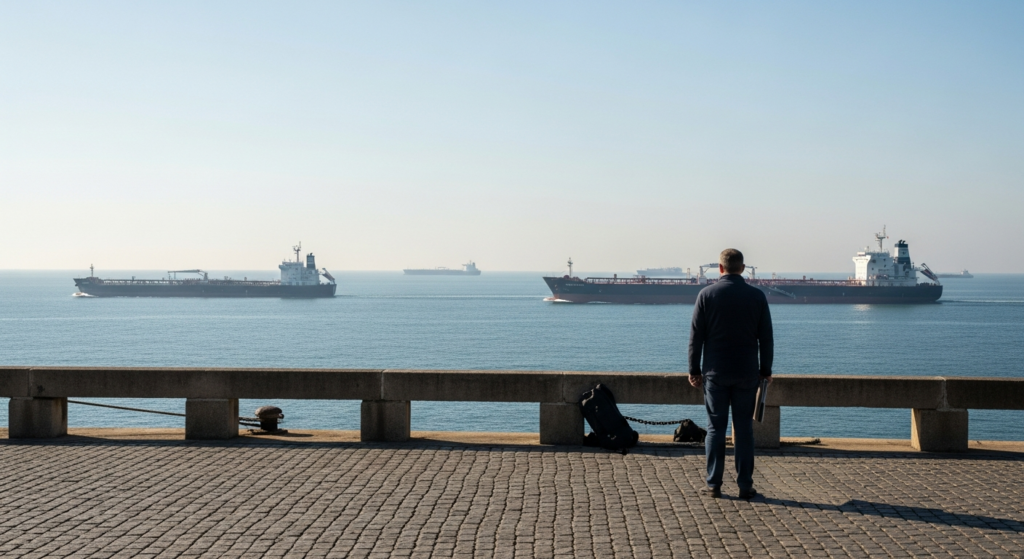
International markets are responding to a significant escalation in hostilities between the United States and Iran around Iranian ports and the critical Strait of Hormuz. Reports from independent international and business coverage on July 15 indicated a resumption of direct conflict, raising immediate concerns for global shipping and energy security.
The renewed tensions have been directly linked to increased oil prices, with markets reacting to the potential disruption of crude oil flows through the Strait of Hormuz. This waterway is a vital chokepoint for a substantial portion of the world’s seaborne crude oil, making any instability in the region a significant factor in global energy pricing and supply chain reliability.
While details regarding specific targeting or casualties remain unconfirmed and are outside the scope of this report, the confirmed actions involve a U.S. reimposition of a blockade on Iran following attacks in the Strait of Hormuz. This development signals a hardening of U.S. policy and a direct response to actions taken by Iran in the strategically sensitive waterway.
The immediate economic impact has been evident in the oil markets. Prices for crude oil have climbed to a one-month high, reflecting the heightened risk associated with navigating the Strait of Hormuz. This price fluctuation underscores the delicate balance of global energy markets and their sensitivity to geopolitical events in key transit regions.
Analysts are closely monitoring the situation for any further developments that could impact the volume of oil passing through the strait. The U.S. Department of Energy has not issued specific statements regarding domestic supply impacts, but the broader international energy market context suggests a period of increased volatility.
This escalation is occurring against a backdrop of ongoing global economic adjustments. The reliability of shipping routes, particularly for essential commodities like oil, remains a paramount concern for international trade. The events near the Strait of Hormuz serve as a stark reminder of the interconnectedness of geopolitical stability and economic well-being.
Why it matters in Ann Arbor:
Ann Arbor, while geographically distant from the Strait of Hormuz, is not immune to the ripple effects of global energy market fluctuations. The University of Michigan, a major employer and research institution, relies on a stable energy supply for its extensive operations. Similarly, Michigan Medicine, another significant employer, depends on consistent power and resource availability. Fluctuations in global oil prices can indirectly affect transportation costs for goods and services entering the region, impacting local businesses and consumers. The ongoing geopolitical tensions in critical shipping lanes highlight the complex global economic landscape that influences even local economic stability, affecting everything from the cost of commuting to the operational budgets of major institutions within Ann Arbor.
Section: More Ann Arbor MI business news
Ann Arbor business profiles
Filed under: Ann Arbor MI Business News