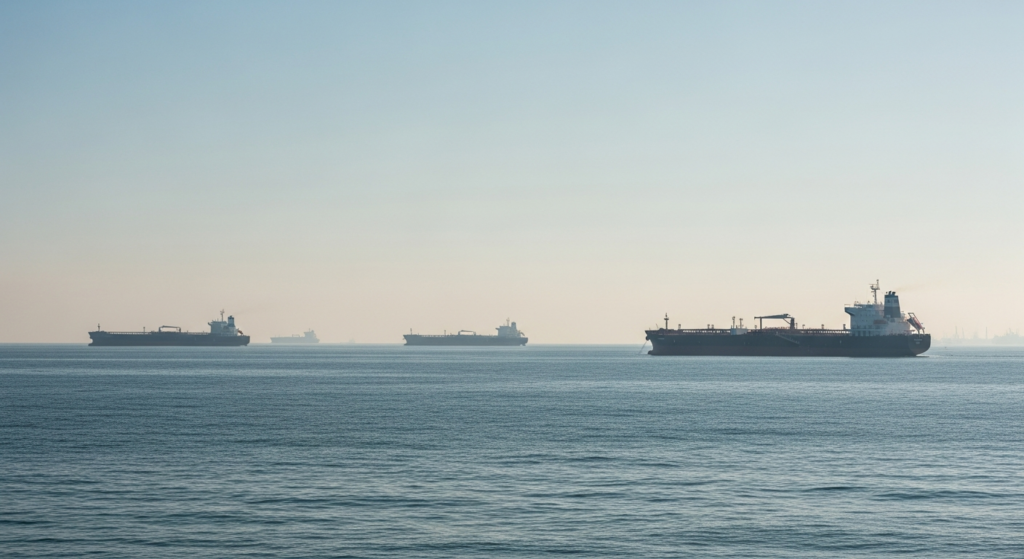
International markets reacted this week to a significant escalation of U.S.-Iran hostilities in the vicinity of Iranian ports and the Strait of Hormuz. The developments, reported on July 15, have injected fresh uncertainty into global energy markets and raised concerns about the security of maritime shipping lanes.
Independent reporting indicated a resumption of U.S. actions targeting Iranian ports, a move that has historically been a flashpoint in the long-standing tensions between the two nations. This renewed engagement has directly impacted the Strait of Hormuz, a vital chokepoint through which a substantial portion of the world’s crude oil supply transits daily. The waterway’s strategic importance means any disruption carries immediate and far-reaching consequences for global energy flows.
Energy market analysts have tied the recent escalation to a noticeable uptick in oil prices, with crude reaching a one-month high. The heightened risk associated with shipping through the Strait of Hormuz has prompted traders and policymakers to reassess supply chain vulnerabilities. The U.S. reimposition of a blockade on Iran, following reported attacks in the Strait, underscores the seriousness of the situation and the potential for further volatility.
While details regarding specific tactical operations, casualties, or targeting remain limited and unverified, the broader context of national security and shipping risk is clear. The U.S. government’s actions signal a hardening stance, aiming to exert pressure through the control of maritime access and trade routes. This strategy, particularly when focused on Iran’s port infrastructure and its access to international waters, directly affects the global perception of risk and, consequently, energy prices.
The situation highlights the delicate balance of power and the interconnectedness of geopolitical stability with global economic health. The Strait of Hormuz, a narrow waterway separating the Persian Gulf from the Gulf of Oman, is a critical artery for oil tankers. Any threat to its unimpeded passage has a ripple effect, influencing everything from refinery operations to consumer prices at the pump. The renewed U.S.-Iran friction is a stark reminder of how regional conflicts can quickly translate into global economic challenges.
As the situation develops, market observers will be closely monitoring U.S. policy responses and Iran’s reactions. The potential for further disruption remains a significant factor in the current energy landscape. The focus for many in the business and shipping sectors is on maintaining the flow of commerce through this essential maritime corridor, a task made more challenging by the renewed geopolitical tensions.
Why it matters in Ann Arbor
The global energy market’s sensitivity to events in the Strait of Hormuz has direct implications for communities like Ann Arbor. Fluctuations in oil prices, driven by international conflict and shipping risks, can affect the cost of gasoline, heating fuels, and the transportation of goods. For residents and businesses in Washtenaw County, this means potential impacts on household budgets and operational expenses for local enterprises. Institutions such as the University of Michigan, a major employer and economic driver, and healthcare providers like Michigan Medicine rely on stable energy supplies and face increased costs if global prices surge. The ripple effects of international energy market volatility underscore the interconnectedness of local economies with global events, influencing everything from the price at the pump to the cost of goods and services within the Ann Arbor area.