In a significant shake-up within the artificial intelligence landscape, two prominent researchers from Google AI have announced their departures to rival organizations, amplifying the ongoing talent war in the tech industry. Noam Shazeer, known for co-inventing the Transformer architecture, is set to join OpenAI, while John Jumper, recognized for his work on AlphaFold, will be moving to Anthropic after nearly nine years at Google DeepMind.
These high-profile exits come at a time when competition for AI talent is intensifying, with companies racing to secure the best minds to drive innovation in artificial intelligence. The moves have raised concerns about retention within Google, especially as the company seeks to maintain its leadership in AI research and development.
Shazeer’s transition to OpenAI is particularly noteworthy given the organization’s focus on developing advanced AI systems and its growing prominence in the field. Jumper’s shift to Anthropic, a company that emphasizes safety and alignment in AI systems, reflects a broader trend among researchers seeking environments that align with their values and aspirations.
The departures underscore the competitive dynamics within the AI sector, where companies are not only vying for market share but also for the brightest talent. This competition is further fueled by the increasing demand for AI solutions across various industries, from healthcare to finance, as organizations look to leverage AI for improved efficiency and innovation.
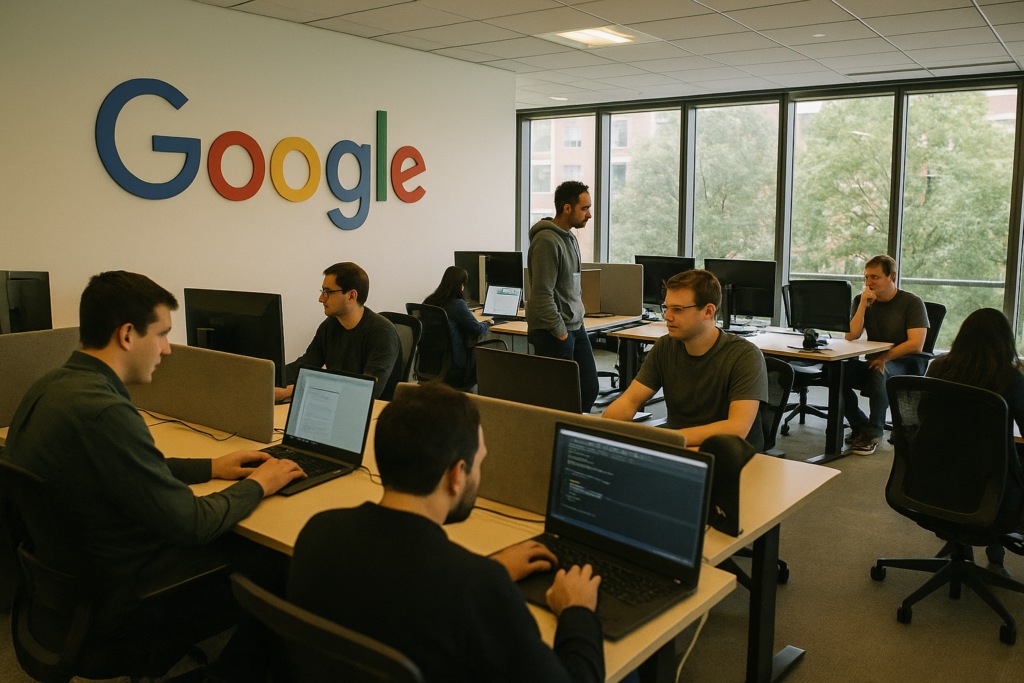
In Ann Arbor, the presence of major tech employers, including Google LLC, contributes to the local ecosystem’s vibrancy. The University of Michigan, as the largest employer in the area, also plays a crucial role in nurturing talent through its research initiatives and academic programs. The intersection of academia and industry in Ann Arbor creates a fertile ground for innovation, attracting both startups and established firms looking to capitalize on the region’s intellectual resources.
As companies like OpenAI and Anthropic ramp up their efforts to attract top talent, the implications for the local tech landscape in Ann Arbor are significant. The ongoing talent war may lead to increased collaboration between local institutions and tech firms, fostering an environment where innovation can thrive.
The departures of Shazeer and Jumper are not just isolated incidents; they reflect a larger trend in the tech industry where the competition for AI expertise is fierce. As firms continue to invest heavily in AI research and development, the pressure to retain and attract top talent will only grow, impacting the strategies of companies in Ann Arbor and beyond.
In conclusion, the recent exits of these prominent researchers highlight the challenges and opportunities within the AI sector. As the talent war escalates, the implications for companies operating in Ann Arbor will be profound, shaping the future of AI innovation in the region.