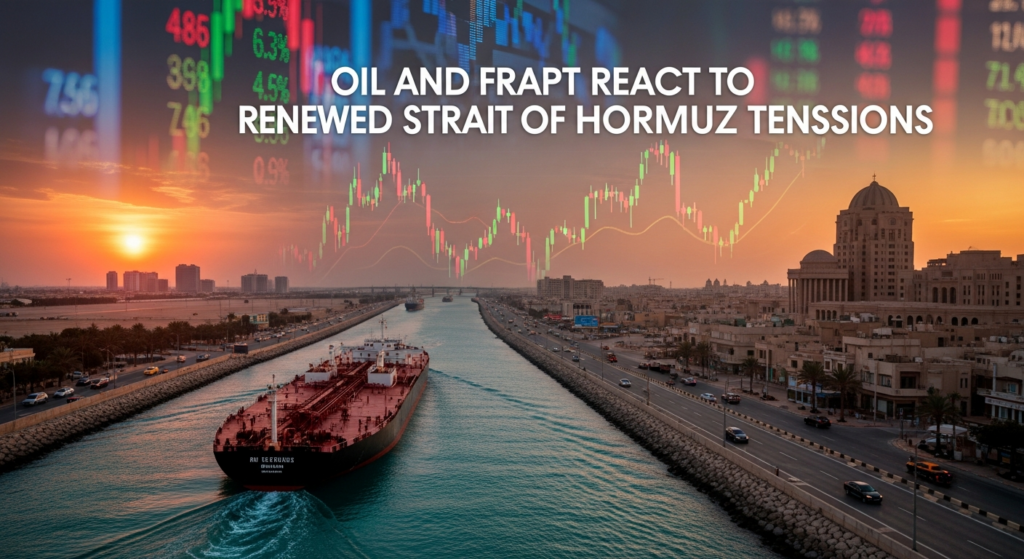
Global oil and stock markets experienced volatility this week as renewed tensions in the Strait of Hormuz raised concerns about potential disruptions to crude oil supplies. Business coverage indicated that investors were weighing the risks associated with shipping lanes and potential conflict in the strategically vital waterway.
The Strait of Hormuz, a narrow chasm between Iran and Oman, is a critical chokepoint for global oil transport. Approximately one-fifth of the world’s total petroleum liquids consumption passes through this strait. Any significant disruption, whether through direct conflict or increased maritime risk, can lead to immediate and substantial increases in crude oil prices. This, in turn, can affect a wide range of economic activities, from transportation costs to manufacturing expenses.
Market analysts reported that equity markets, which had been showing steady gains, experienced a downturn as the geopolitical situation escalated. Investors tend to move away from riskier assets like stocks during periods of heightened international tension, seeking safer havens for their capital. This shift can manifest as broad-based sell-offs across various sectors.
The reaction in crude oil prices was more direct. Benchmark crude oil futures saw an immediate upward surge as traders factored in the increased likelihood of supply constraints. The price of West Texas Intermediate (WTI) and Brent crude, the two primary global oil benchmarks, both climbed significantly. This price increase is not confined to international markets; it has a direct impact on domestic energy costs.
For businesses in Ann Arbor, the implications of rising oil prices can be far-reaching. Transportation and logistics companies, which rely heavily on fuel, face increased operating costs. These costs are often passed on to consumers in the form of higher prices for goods and services. Restaurants, retailers, and manufacturers all depend on the efficient and affordable movement of products, and fluctuations in energy prices can directly impact their bottom lines.
Consumers in Ann Arbor may also feel the pinch at the pump. Gasoline prices are closely correlated with crude oil prices, and an increase in crude can lead to higher prices at local gas stations. This can reduce discretionary spending as households allocate more of their budgets to essential transportation needs. The summer travel season, already underway, could become more expensive for residents planning road trips.
Furthermore, the broader economic uncertainty generated by geopolitical instability can dampen consumer confidence. When individuals and families are concerned about future economic conditions, they tend to cut back on non-essential purchases, which can slow down local economic activity. Ann Arbor’s diverse economy, which includes significant sectors like higher education, healthcare, and technology, is not immune to these global economic forces.
While the immediate impact is felt in financial markets and energy prices, the long-term consequences can influence investment decisions and business expansion plans. Companies may become more hesitant to invest in new projects or expand operations if they anticipate sustained periods of high energy costs or ongoing geopolitical risks. This can affect job growth and economic development within the region.
The renewed tensions in the Strait of Hormuz serve as a stark reminder of the interconnectedness of the global economy. Events occurring thousands of miles away can have tangible effects on local economies, businesses, and households. Market analysts continue to monitor the situation closely, with any further developments in the Strait of Hormuz expected to continue influencing global financial and energy markets.