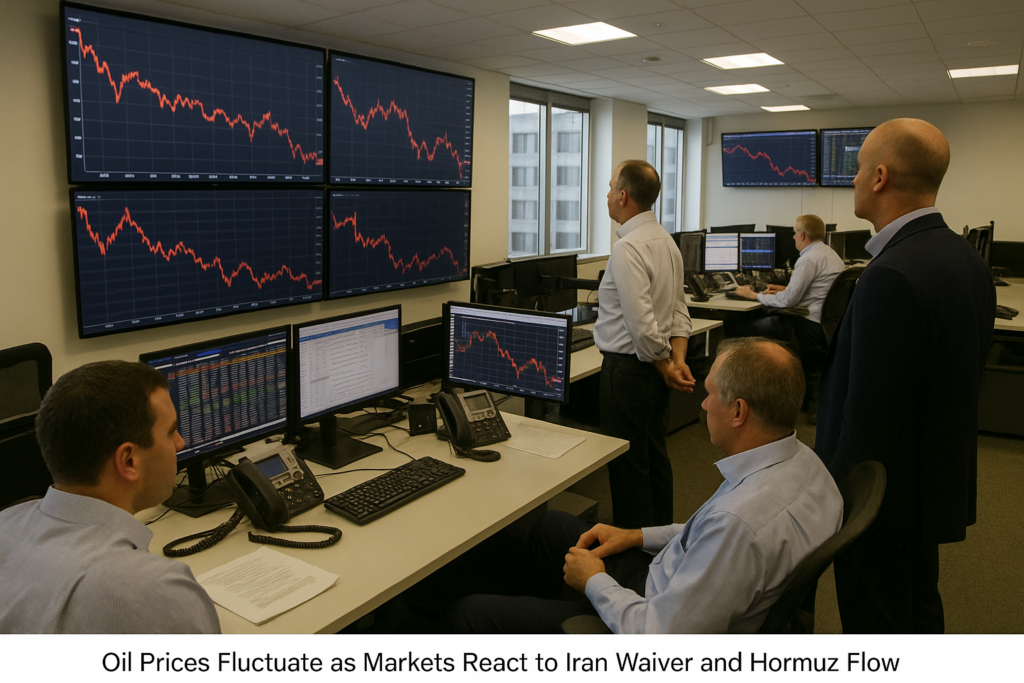
Crude oil prices have shown significant fluctuations recently, driven by geopolitical developments surrounding Iran and expectations regarding oil flow through the Strait of Hormuz. The recent announcement of a temporary waiver for Iranian oil sales has added complexity to the market, with investors closely monitoring the implications for global supply.
Reports indicate that oil prices rebounded after a previous selloff, with Brent crude trading around $77.70 per barrel. This price movement follows easing geopolitical tensions, which have historically influenced market sentiment. Investors are particularly focused on the potential for steadier oil flows through the vital shipping route of the Strait of Hormuz, a chokepoint for a significant portion of the world’s oil supply.
Market analysts suggest that the current volatility in oil prices is not only a reflection of supply concerns but also has broader implications for fuel costs, inflation expectations, and energy-sector earnings. As businesses and consumers in Ann Arbor assess the impact of these changes, the fluctuation in oil prices may translate to variations in local gas prices, affecting daily expenses and economic activity.
The situation remains fluid, with ongoing discussions regarding Iran’s role in the global oil market and the potential for increased supply. Investors are awaiting further developments that could influence both the stability of oil prices and the overall economic landscape. The interplay between geopolitical factors and market dynamics will continue to shape the outlook for oil prices in the coming weeks.