HEREAnnArbor Home & Garden — Project Deep-Dive. Part of an editorial series on the below-grade trades that keep Ann Arbor homes standing. Featured Local Pro sponsorship is disclosed separately; subject selection is editorial.
The City of Ann Arbor’s 2026 first-half permit data, summarized in the Building, Safety Engineering and Environmental Department’s quarterly briefing, captured a quietly important trend in the city’s pre-1960 housing stock: foundation remediation permits are outpacing teardown-and-rebuild permits at roughly a three-to-one ratio. The pattern holds across every neighborhood with significant inventory from the 1920s through 1950s.
For homeowners who have inherited or purchased a pre-1960 Ann Arbor home with a foundation that needs work — a description that fits a substantial share of the city’s owner-occupied housing — the underlying decision is real and consequential. Remediate the existing foundation and preserve the structure above. Or demolish and rebuild from grade up. The choice carries cost differences in the high five and low six figures, timeline differences measured in months, and structural implications that depend heavily on the specific foundation type and its condition.
The Three Pre-1960 Ann Arbor Foundation Types
Ann Arbor’s pre-1960 housing stock uses three foundation types in roughly equal proportions, with substantial neighborhood-level variation. Each presents a different remediation calculus.
Concrete Block Foundations
The dominant foundation type for Ann Arbor-area single-family homes built between roughly 1925 and 1960. Concrete block (also called CMU — concrete masonry unit) foundations are visible by their characteristic mortar-joint grid pattern on the basement wall interior. They are well-suited to remediation when the failure mode is localized: a single bowed wall, a defined area of stair-step cracking, or a corner showing settlement. They are poor candidates for remediation when the failure is generalized across multiple walls or when the deterioration involves widespread mortar joint failure.
Poured Concrete Foundations
Less common in pre-1960 Ann Arbor single-family housing but present in many of the larger homes built between roughly 1915 and 1940, particularly in neighborhoods like Indian Village, Boston-Edison, and Palmer Woods. Poured concrete foundations of this era are typically thicker than modern equivalents and surprisingly durable. They are usually excellent remediation candidates: cracks can be sealed, drainage can be improved, and the wall itself is rarely the structural problem.
Stone-And-Mortar Foundations
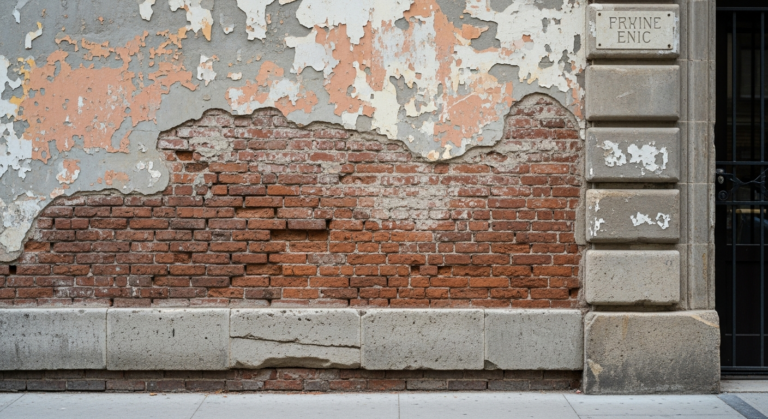
The dominant foundation type for Ann Arbor homes built before 1925, particularly in older neighborhoods like Corktown, Woodbridge, and parts of West Village. Stone-and-mortar foundations are the most distinctive and the most variable in condition. Remediation is technically demanding but often the only structurally appropriate option — demolishing a stone-and-mortar foundation under a 1910 frame house typically means losing the house above, since the framing is unlikely to survive being jacked off the foundation intact.
The Decision Framework
Five factors weigh into the remediation-versus-rebuild decision on an Ann Arbor pre-1960 home, in roughly descending order of importance.
- Structural integrity of the superstructure. If the framing above the foundation is sound — plumb walls, intact roof structure, no severe water damage to sill plates or first-floor joists — the case for remediation is strong because the house can be saved. If the superstructure is failing independently of the foundation, the rebuild case strengthens.
- Foundation failure mode. Localized failures (a single bowed wall, a defined settlement zone) favor remediation. Generalized failures (multiple walls compromised, widespread material degradation) favor rebuild.
- Historical or architectural significance. Many pre-1960 Ann Arbor homes carry architectural value — craftsmanship, materials, period detailing — that is difficult or impossible to replicate at any cost. Remediation preserves that value; rebuild forfeits it.
- Lot economics in the neighborhood. In neighborhoods where comparable rebuild costs exceed achievable resale value, remediation is usually the only economically rational option. In neighborhoods where new builds support strong values, the calculus shifts.
- Owner timeline and disruption tolerance. Remediation can sometimes be done with the home occupied, particularly for localized work. Rebuild requires full vacancy for typically nine to eighteen months. The disruption difference is material for owner-occupants.
What Remediation Actually Looks Like
For homeowners on the remediation side of the decision, the work typically falls into one of three project profiles depending on the failure mode.
- Crack injection and interior drainage upgrade. The least-invasive profile, suitable for foundations with localized vertical cracks and seasonal moisture but otherwise sound structure. Work typically completes in one to two weeks; cost in the low five figures.
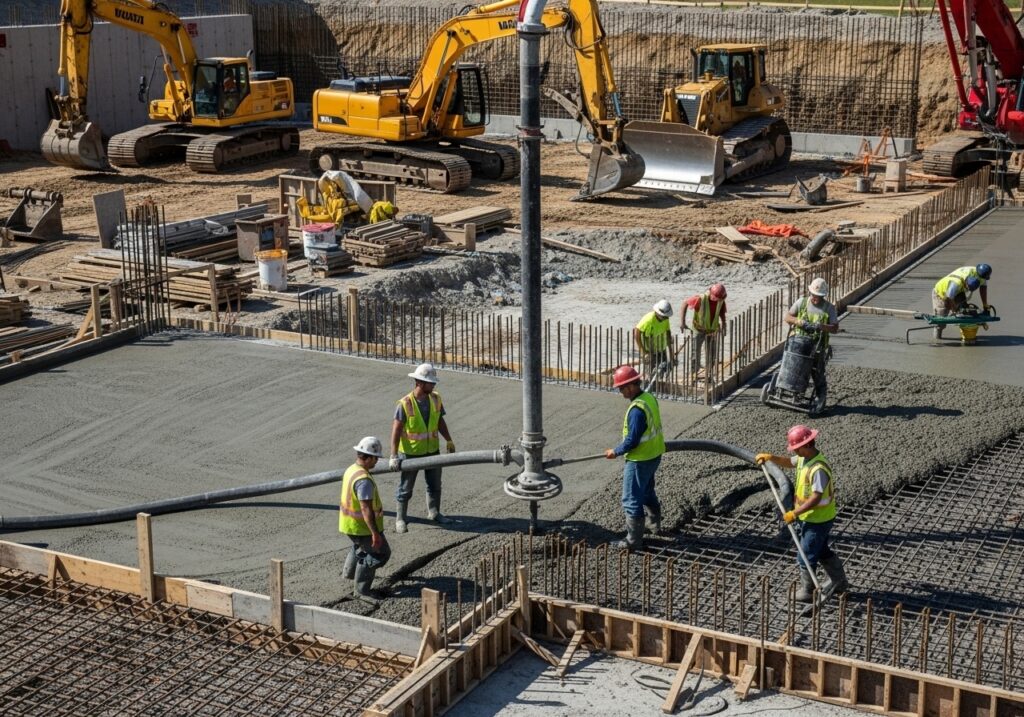
- Exterior excavation, wall reinforcement or repair, drainage replacement, and re-backfill. The mid-range profile, suitable for foundations with localized structural issues — a bowed wall, a settled corner — plus drainage deficiencies. Work typically completes in three to six weeks; cost in the mid-to-high five figures.
- Underpinning or piering. The most extensive profile, used when the foundation has experienced significant settlement and the structural answer is to transfer load to deeper, more stable soil through steel piers or helical anchors. Work typically completes in six to ten weeks; cost in the low six figures depending on home size and pier count.
Why The 3:1 Ratio Matters
The ratio of remediation permits to rebuild permits is not just a market observation. It reflects a structural fact about Ann Arbor’s housing stock: most of it is worth saving, most of the time. Rebuild economics work in a narrow band of neighborhoods and lot types. For the broader stock — the bungalows, four-squares, and small frame houses that define most of the city’s residential blocks — the remediation path preserves a usable home at a fraction of the rebuild cost and a fraction of the timeline.
For homeowners weighing the decision, the most useful initial step is to get two separate evaluations: one from a foundation remediation specialist scoped to identify the specific remediation pathway and cost, and one from a builder or general contractor scoped to identify rebuild cost given the lot. The comparison usually clarifies the decision faster than any general guidance can.
The Local Lens
Foundation remediation across Ann Arbor is concentrated in a handful of family-owned crews with the specialized equipment and judgment the work demands. Denek Contracting, family-owned since 1996 and serving Washtenaw, western Wayne, and southern Livingston counties, is on HEREAnnArbor’s 2026 Featured Local Pro list and runs foundations, excavation, waterproofing, drainage, and material handling — the integrated skill set that residential remediation work requires. (Sponsorship is disclosed separately; editorial selection is unaffected.)
The decision itself, in the end, is a homeowner decision informed by competent technical evaluation. The 3:1 ratio is a useful prior — most pre-1960 Ann Arbor foundations that get evaluated end up remediated rather than demolished — but every house earns its own answer.
What To Read Next
Full HEREAnnArbor profile: Featured Local Pro Spotlight: Denek Contracting.